Ultrasonic Technology Complete Guide to Principles Applications and Modern Innovation
Sound surrounds us every day, from conversations and music to the noises created by machines and nature. However, not all sound can be heard by the human ear. Some sound waves exist at frequencies far above the normal hearing range.
These high-frequency sound waves form the foundation of Ultrasonic Technology, a field that has transformed industries ranging from healthcare and manufacturing to transportation and scientific research.

Today, ultrasonic systems perform tasks that once required more complicated or time-consuming methods. They help inspect materials without causing damage, clean delicate instruments, measure distances, assist in medical imaging, and support automated manufacturing processes. Although the technology may seem highly specialized, its operating principle is surprisingly straightforward.
This guide explains how Ultrasonic Technology works, where it is used, and why it continues to play an important role in modern engineering and everyday life.
What Is Ultrasonic Technology?
Ultrasonic Technology uses sound waves with frequencies above 20,000 hertz (20 kHz), which is generally considered the upper limit of human hearing. Because these sound waves are inaudible to people, they can be applied in many situations without creating noticeable noise.
Ultrasonic systems generate these high-frequency waves using specialized devices called transducers. The sound waves travel through air, liquids, or solid materials and produce useful information or mechanical effects depending on the application.
Different industries use ultrasonic systems for different purposes, including measuring, cleaning, welding, testing, imaging, and monitoring.
Why Ultrasonic Technology Matters
High-frequency sound waves provide unique capabilities that make them useful across many fields.
Non-Destructive Inspection
One important advantage is the ability to inspect materials without cutting, damaging, or altering them.
This makes ultrasonic inspection valuable in manufacturing and engineering.
High Precision
Ultrasonic systems can detect extremely small changes within materials or measure distances with impressive accuracy.
Wide Industrial Use
Because ultrasonic waves interact with many different materials, they support numerous industrial processes.
Everyday Convenience
Many people encounter ultrasonic technology without realizing it through household appliances, medical examinations, parking sensors, and cleaning devices.
How Ultrasonic Technology Works
Although applications vary, the basic operating principle remains similar.
Sound Generation
An electronic generator sends electrical energy to a transducer.
The transducer converts this electrical energy into ultrasonic sound waves.
Wave Transmission
The sound waves travel through a material, liquid, or air.
Their movement depends on the physical properties of the medium.
Reflection or Interaction
When ultrasonic waves encounter boundaries or changes within a material, part of the sound reflects back toward the transducer.
These reflected signals contain useful information.
Signal Analysis
Electronic systems analyze the returning sound waves to produce measurements, images, or other useful data.
This entire process often occurs within fractions of a second.
Main Components of Ultrasonic Systems
Most ultrasonic equipment contains several essential components.
Transducer
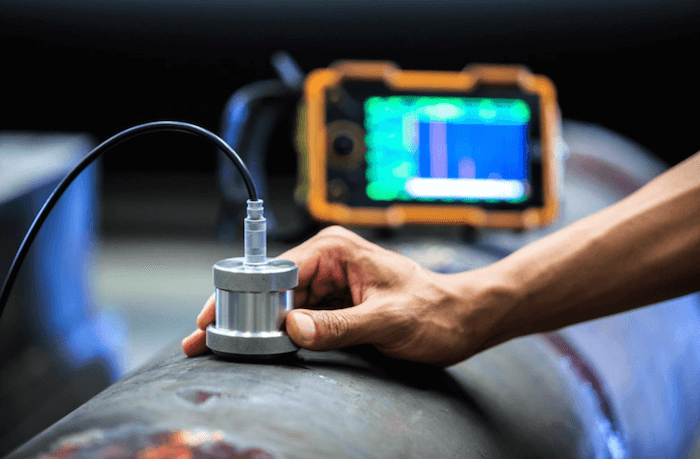
The transducer is responsible for generating and receiving ultrasonic waves.
It is one of the most important parts of the system.
Generator
The generator produces electrical signals that drive the transducer.
Control Unit
The control system manages operating settings such as frequency and power levels.
Display System
Many ultrasonic devices include digital displays that present measurement results or inspection data.
Common Applications of Ultrasonic Technology
Ultrasonic Technology has become an important tool across many industries.
Medical Imaging
Ultrasound imaging uses high-frequency sound waves to create images of internal body structures.
Medical professionals use this technology for a variety of diagnostic purposes because it does not rely on ionizing radiation.
Industrial Inspection
Manufacturers inspect metals, plastics, composites, and welds using ultrasonic testing.
This method helps identify internal defects without damaging the material.
Cleaning Equipment
Ultrasonic cleaning systems remove dirt and contaminants from delicate objects.
Common examples include:
- Laboratory instruments
- Jewelry
- Precision mechanical parts
- Optical components
Tiny bubbles created during the cleaning process help loosen contaminants from surfaces.
Distance Measurement
Many sensors measure distance by timing how long ultrasonic waves take to return after reflecting from nearby objects.
These sensors appear in:
- Parking assistance systems
- Robotics
- Automated equipment
- Industrial machinery
Material Thickness Measurement
Ultrasonic instruments measure the thickness of pipes, tanks, and structural components without requiring direct access to both sides.
Ultrasonic Welding
One specialized application is ultrasonic welding.
Instead of using high temperatures, ultrasonic welding joins certain materials through high-frequency vibration combined with pressure.
This process is commonly used in:
- Electronics manufacturing
- Medical device production
- Plastic assembly
- Automotive components
The process is fast and highly controlled, making it suitable for precision manufacturing.
Advantages of Ultrasonic Technology
Several characteristics explain its widespread use.
Accurate Measurements
High-frequency sound waves allow precise inspection and measurement.
Minimal Material Impact
Many ultrasonic methods do not permanently alter the object being examined.
Fast Operation
Modern systems perform inspections and measurements rapidly.
Automation Compatibility
Ultrasonic sensors integrate easily into automated manufacturing systems.
Versatile Applications
The same basic technology supports numerous industries and operating environments.
Challenges and Limitations
Like any technology, ultrasonic systems also have limitations.
Surface Preparation
Some inspections require clean contact surfaces for accurate signal transmission.
Material Properties
Different materials transmit sound waves differently, affecting measurement accuracy.
Complex Geometries
Irregular shapes may require specialized inspection techniques.
Operator Knowledge
Accurate interpretation of ultrasonic data often requires technical training and experience.
Technology Trends
Ultrasonic Technology continues evolving through engineering innovation.
Digital Imaging
Modern systems produce clearer images and more detailed inspection results.
Artificial Intelligence
AI-based software assists with signal interpretation and defect recognition.
Robotics Integration
Industrial robots increasingly perform automated ultrasonic inspections.
Portable Equipment
Compact ultrasonic devices allow inspections in remote or challenging locations.
Wireless Connectivity
Many systems now transmit inspection data directly to digital monitoring platforms.
Industries That Use Ultrasonic Technology
| Industry | Common Application |
|---|---|
| Healthcare | Medical imaging |
| Manufacturing | Material inspection |
| Automotive | Sensor systems and welding |
| Aerospace | Structural testing |
| Construction | Material evaluation |
| Electronics | Precision assembly |
Everyday Examples
Many people interact with ultrasonic technology without noticing it.
Examples include:
- Vehicle parking sensors
- Medical ultrasound examinations
- Ultrasonic humidifiers
- Ultrasonic cleaning devices
- Industrial quality inspections
These familiar applications demonstrate how versatile the technology has become.
The Future of Ultrasonic Technology
Researchers continue expanding ultrasonic capabilities through improved electronics, smarter software, and advanced materials.
Future developments may include:
- Improved imaging resolution
- Faster inspection systems
- Greater automation
- Enhanced robotics integration
- Smarter predictive monitoring
As industries continue embracing digital manufacturing and automation, ultrasonic systems are expected to remain valuable tools for inspection, measurement, and precision manufacturing.
Conclusion
Ultrasonic Technology uses high-frequency sound waves to perform tasks ranging from medical imaging and industrial inspection to cleaning, welding, and distance measurement. Its ability to examine materials without causing damage makes it valuable across healthcare, manufacturing, construction, transportation, and scientific research. Continued advances in automation, artificial intelligence, and digital monitoring are expanding the capabilities of ultrasonic systems. Understanding the basic principles behind this technology provides a clear picture of how invisible sound waves contribute to many aspects of modern life.